Why Do I Suddenly Have Gophers in My Yard?
By Gopher Champs ·
Gophers may seem to appear suddenly because a new animal has moved in or an existing gopher has started making visible mounds.
From above ground, both look the same: one morning there is fresh soil in a lawn that looked fine the day before. The difference matters, because it changes what you should check next. This guide covers why activity can seem to start all at once. If you are still unsure the animal is a gopher, start with our gopher identification guide with real mound photos.
Gophers are often there before you see them
Gophers spend almost all their time underground. UC Integrated Pest Management (UC IPM) notes that gophers do not hibernate and are active year-round, even when you see no fresh mounds. A gopher can dig and feed for a while without pushing much soil to the surface. When it starts building new tunnels and shoving the loose dirt up, the mounds can show up quickly. UC IPM notes that one gopher can create several mounds in a day.
So "sudden" can simply mean the activity became visible. It does not always mean the gopher just arrived.
What makes a yard attractive to gophers
Gophers are plant eaters. UC IPM explains that they mostly feed on roots and fleshy plant parts they reach while digging, and they often move into yards and gardens to feed on crops, ornamentals, shrubs and trees. A yard with healthy plants offers food.
Digging conditions matter too. In areas without irrigation, UC IPM says mound building is most noticeable in winter and spring, when the soil is moist and easy to dig. In watered lawns, flower beds and gardens, digging conditions are usually good all year, so mounds can appear at any time. A well-kept, irrigated yard can be easier to dig in than the dry ground around it.
A new gopher or the same one?
Gophers usually live alone in their burrow system, except during breeding season or when a female is raising young. If you have had gopher activity handled before and see fresh mounds later, it could be a new animal moving in or a gopher that was never caught. A photo alone cannot tell you which.
We cannot tell you from a website why gophers showed up on your property. An inspection can help assess the fresh activity; a mound alone cannot establish what changed. What you can do is watch where the fresh soil appears and how often.
Several mounds do not mean many gophers
A cluster of new mounds can feel like an invasion. Because one gopher can push up several mounds in a day, a busy patch of lawn may come from a single animal. Mound count alone does not tell you how many animals are present.
What to do when new mounds appear
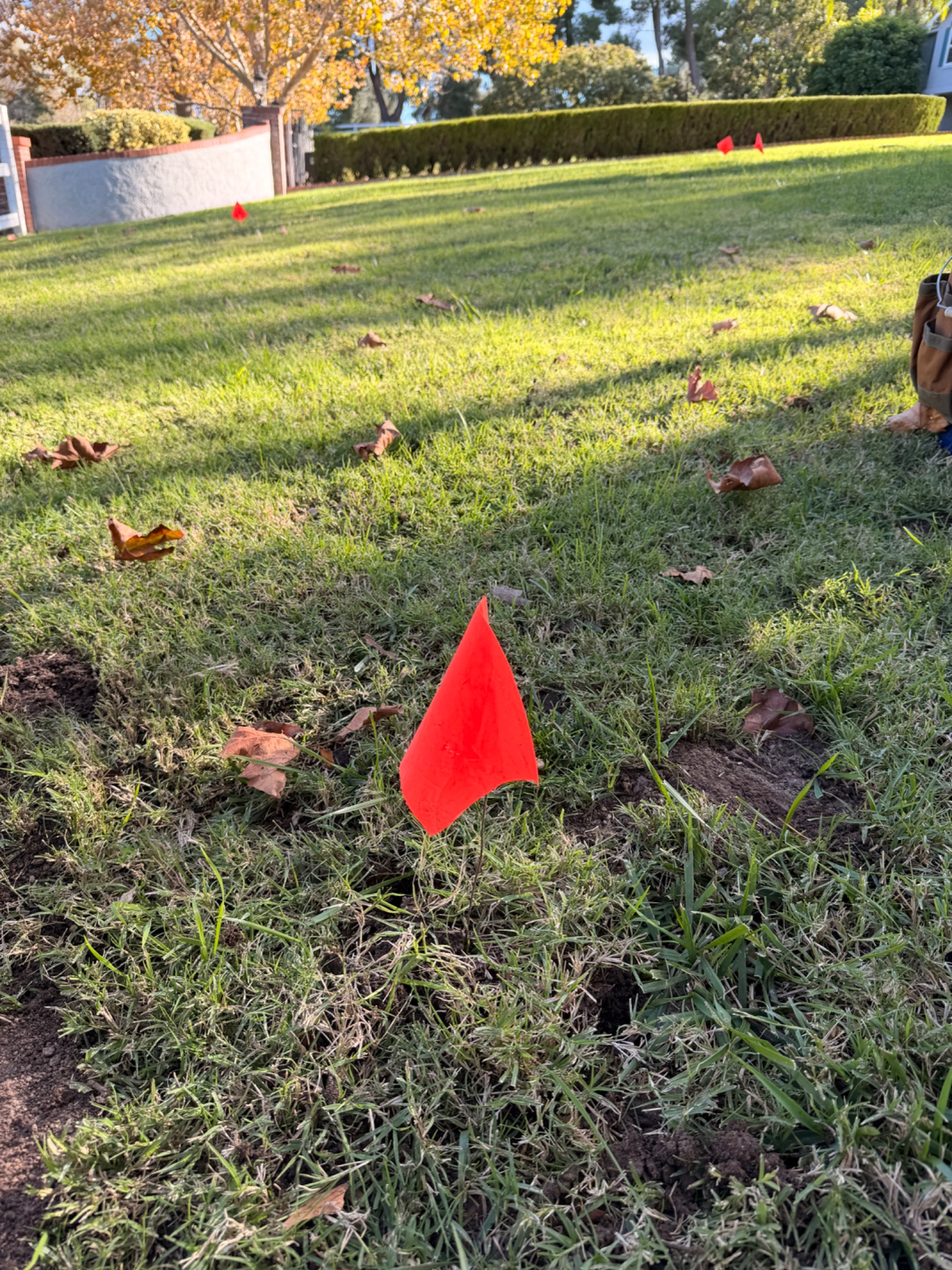
- Note where the fresh soil is. Check the front yard and the backyard, and take a wide photo and a close photo of each new mound.
- Leave fresh mounds in place for now. They show where the gopher is working, which helps with trap placement.
- Watch for more. Look for newly pushed-up soil and record where it appears. Soil color and moisture alone do not confirm activity.
- Get it checked early. UC IPM says early detection is critical to prevent damage to plants and irrigation lines.
When a customer reports new activity, our technicians compare fresh activity in the front and back of the property, often using the homeowner's photos, and reassess the area. That comparison helps show where the gopher is working now, rather than guessing from one mound.
When to call Gopher Champs
If fresh mounds keep showing up, Gopher Champs offers residential gopher control with a poison-free trap system that can deliver results in as little as 2 days. Timing varies by property and activity. Residential trapping includes a 60-day warranty, subject to its terms, for the same treated area; see how our 60-day warranty works. Call (951) 330-7399 to get a free quote.
Source: UC IPM: Pocket Gophers (updated June 2025).
Get a Free Quote
California DPR Business License #45541.