Protect Your Garden From Gophers This Spring. Temecula, Murrieta & Menifee
Spring in Southwest Riverside County means two things happen at the same time: homeowners start planting, and gophers start moving.
New raised beds, young trees, fresh transplants. It's the most vulnerable your yard will be all year. And it lines up perfectly with breeding season, when juvenile gophers push out of established colonies looking for new territory and easy digging.
If you've lost plants to gophers before, you already know how fast it happens. This guide covers what actually works, for the gardener who handles it themselves and for the one who'd rather have it done right the first time.
Why Spring Is the Highest-Risk Season for Gardens Here
Gophers don't hibernate in Southern California. They're active 12 months a year. But spring concentrates the risk:
New gophers are moving. Breeding season pushes juveniles out of established tunnel networks. They're looking for soft, easy soil, and a freshly prepared garden bed is exactly that. Homeowners across Temecula, Murrieta, and Menifee see the biggest spike in new mound activity between March and May.
New plants can't absorb the hit. A mature tree can survive gopher pressure. A newly planted shrub or a seedling in a raised bed usually can't. The root system isn't established enough to recover from tunnel damage.
In the Hemet and San Jacinto Valley, the dry alluvial soil makes freshly watered garden beds even more attractive to migrating gophers. The contrast between hard surrounding ground and soft irrigated soil draws them in fast.
Homeowners who wait for a mound to appear before they act are already dealing with an active infestation. The better move is to build protection into the planting process itself.
The Two Physical Barriers Worth Doing
Skip the ultrasonic spikes and the castor oil repellents. In this soil, with this gopher pressure, physical barriers are the only prevention method that consistently delivers.
¼-Inch Galvanized Hardware Cloth for Raised Beds
Before you fill a single raised bed this spring, line the bottom and lower interior walls with ¼-inch galvanized hardware cloth. Do it before the soil goes in. Retrofitting it after the fact is a much bigger job.
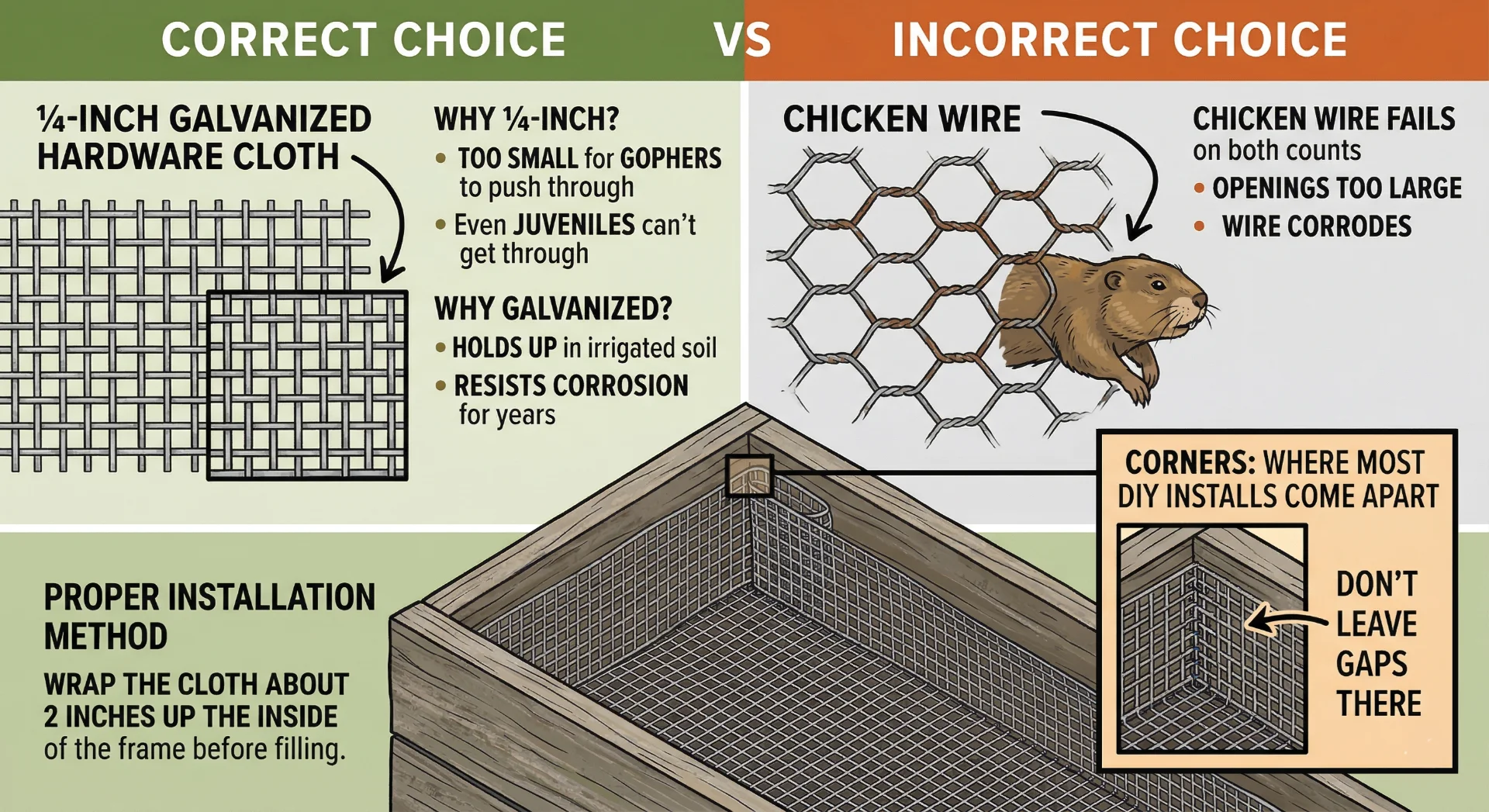
Why galvanized, why ¼-inch? Galvanized holds up in irrigated soil for years. The ¼-inch opening is too small for gophers to push through, including juveniles. Chicken wire fails on both counts. Openings are too large and the wire corrodes.
Wrap the cloth about 2 inches up the inside of the frame before filling. Corners are where most DIY installs come apart, so don't leave gaps there.
Root Baskets for Trees and Shrubs
New trees and shrubs are most at risk in their first season. The root ball is small, concentrated, and easy to reach from below. By the time the plant shows stress above ground, the root system is already gone.
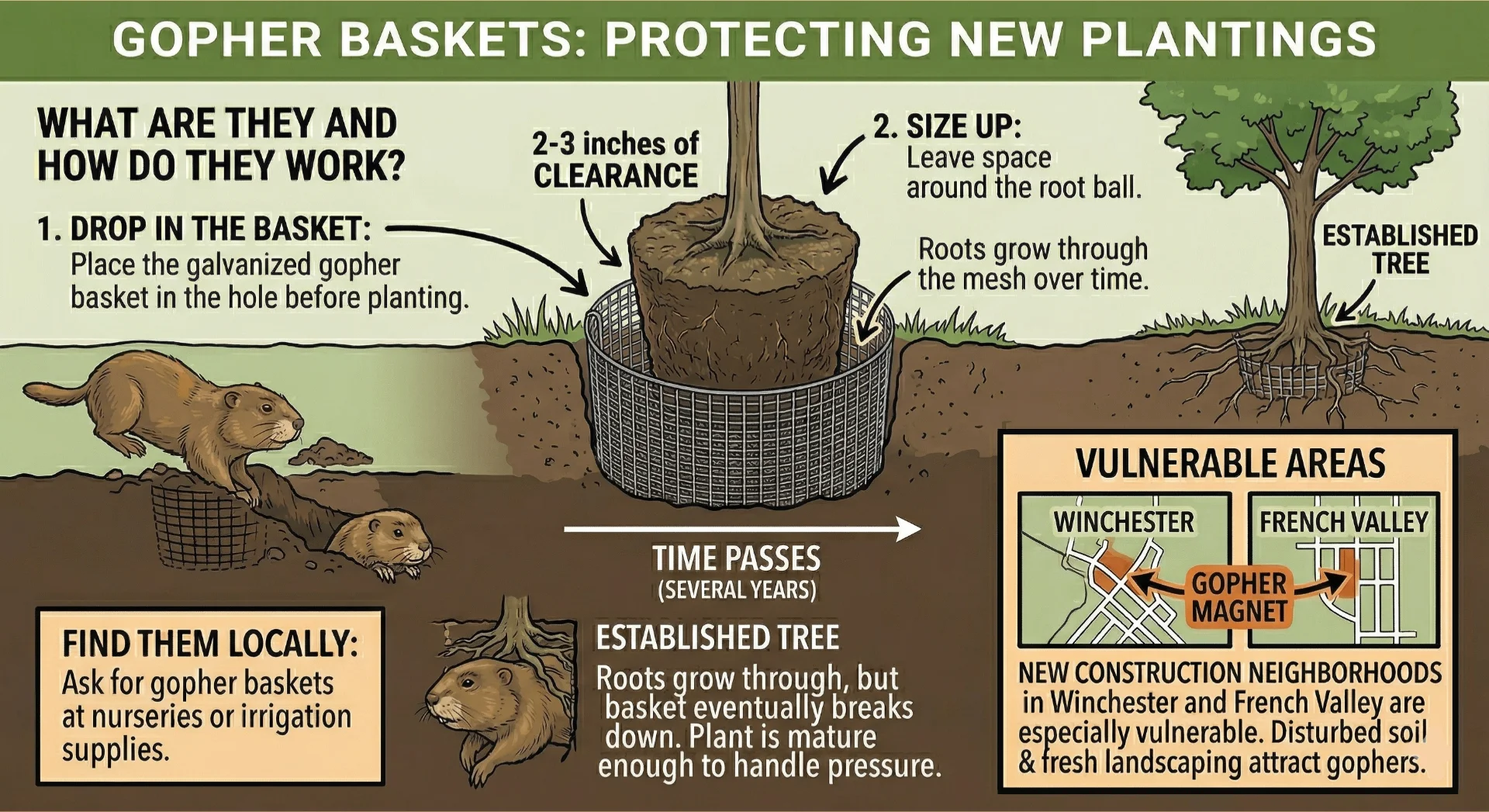
Galvanized wire root baskets, also called gopher baskets, drop into the planting hole before the tree goes in. Roots grow through the mesh over time. By the time the basket eventually breaks down, the plant is established enough to handle the pressure.
Size up so there's 2–3 inches of clearance around the root ball. Ask for gopher baskets at any local nursery or irrigation supply. They'll know exactly what you need. New construction neighborhoods in Winchester and French Valley are especially vulnerable. Disturbed soil and fresh landscaping are a gopher magnet.
Perimeter Habits That Actually Move the Needle
Barriers protect individual beds. These habits reduce how many gophers reach them.
Pack exposed soil along fence lines and edges. Loose, freshly tilled soil near property borders is an easy entry point for migrating gophers. After planting, compact the edges or cover them with mulch or rock. The harder the perimeter, the less interest you generate. Properties in Lake Elsinore and Wildomar near the Ortega foothills are particularly exposed. Hillside gophers migrate down toward irrigated yards as the surrounding ground dries out in spring.
Check the yard after heavy watering. Saturated ground collapses tunnels and forces gophers to relocate. New activity often shows up 1–2 days after a heavy irrigation cycle or rain. Catching it early is the difference between one gopher and a settled colony.
Watch adjacent properties. Gophers don't stop at your fence line. Active mounds on a neighboring lot mean pressure is building in your direction. It's worth noting sooner rather than later.
DIY Trapping vs. Hiring a Pro. The Honest Version
Trapping is the right removal method. Poison-free, targeted, and permanent when done well. That's true whether you're doing it yourself or hiring someone.
The difference is time and execution.
DIY trapping works, but finding active tunnel runs, placing traps correctly, checking them consistently over several days, and staying on it across a larger property takes real commitment. If you're already in the middle of a planting project, managing another property, or working with a yard that has established tunnel networks, it adds up fast.
Professional removal uses the same approach with better tools, faster execution, and a follow-up process built in. A good service clears active gophers in a day or two, documents the result, and backs it up.
Neither option is wrong. It comes down to what your time is worth and how much is at stake in the new plantings. A single small bed? Handle it yourself. A larger spring landscape project with significant plant investment? Professional removal before you plant is worth the call.
Get the Sequence Right
Most guides focus on what to do. The part that gets skipped is when.
The most protected garden follows this order: remove active gophers first, install barriers during the build, maintain the perimeter after. Do it in sequence and you're starting clean. Skip the first step and you're building barriers around a problem that's already inside them.
That's the piece that makes everything else work.